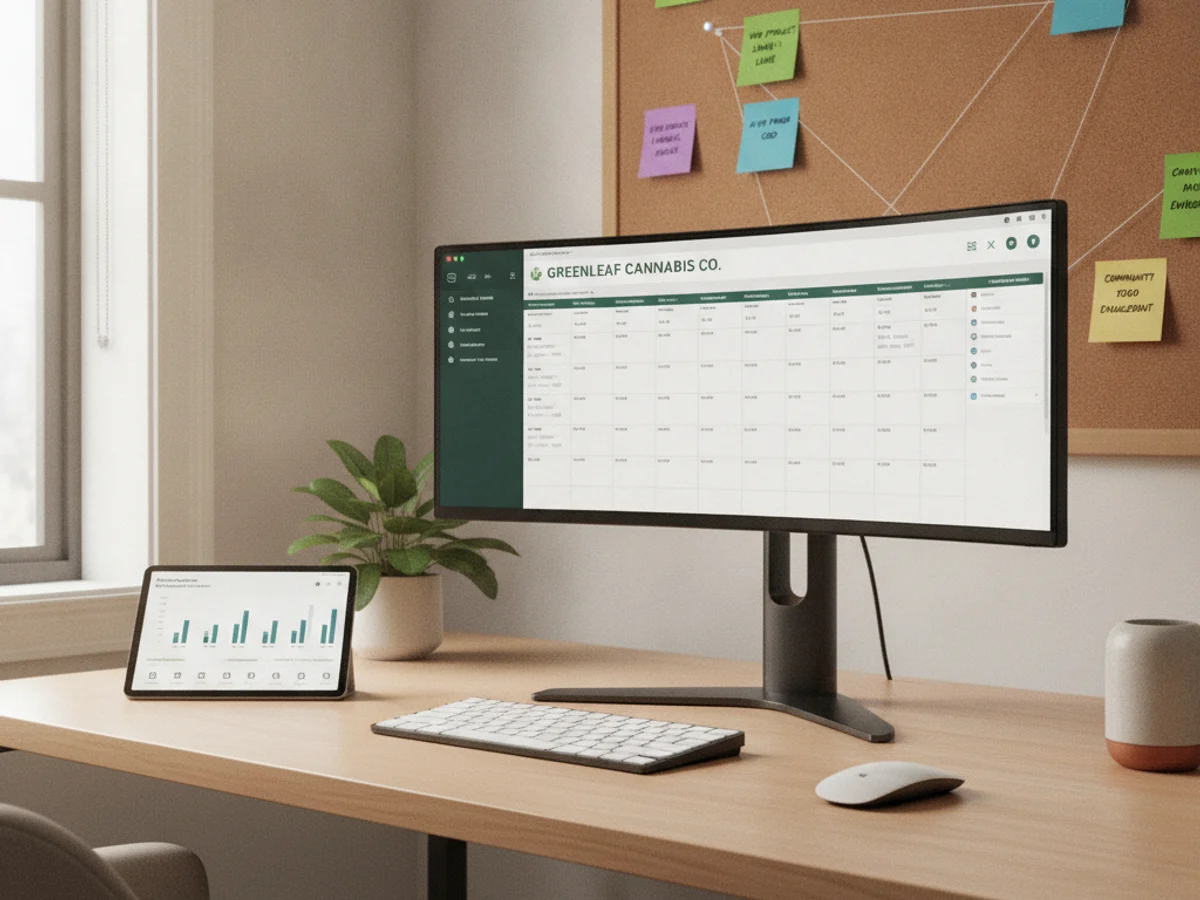
The term "virtual assistant" means different things in different industries. In cannabis dispensary operations, a VA is not a general admin support role. The tasks that create the most value for cannabis operators require specific knowledge of METRC, cannabis POS systems, COA documentation, and the compliance reporting cycle.
A trained cannabis VA reduces the operational load on your on-site team by owning the administrative and compliance-adjacent work that is time-consuming, repetitive, and high-stakes when done inconsistently.
What a cannabis virtual assistant does for dispensary operations
The most common tasks cannabis VAs handle fall into three categories: compliance documentation, operational reporting, and administrative coordination. Each of these categories involves work that benefits from consistency and cannabis-specific knowledge rather than speed or general admin skills.
Compliance documentation includes METRC reconciliation, transfer verification, adjustment logging, and audit prep. A VA who understands the METRC workflow can run the daily reconciliation, flag discrepancies, enter corrections with the right dates and reason codes, and maintain the compliance log that auditors will ask for.
Operational reporting covers end-of-day POS reports, sales trend summaries, inventory turnover reports, and the weekly performance snapshots that help operators make decisions without spending hours pulling data themselves. A VA who knows your POS system can build a reporting rhythm that puts relevant numbers in front of you on a schedule rather than requiring you to dig for them.
Administrative coordination includes vendor communication, scheduling, license renewal tracking, document management, and the internal coordination tasks that otherwise fall to whoever has time.
METRC reporting and compliance reconciliation
METRC compliance is the area where cannabis operators most consistently underinvest in support. Daily reconciliation is a task that requires accuracy, cannabis-specific knowledge, and time, but many dispensaries assign it to whoever is available at the end of a shift rather than to someone whose primary job it is.
A cannabis VA assigned to METRC reporting runs the daily reconciliation against your POS data, identifies the specific transactions or packages where records diverge, enters corrections with the correct historical dates and reason codes, and logs every change in your compliance record. They also monitor your POS integration error log for failed METRC sync calls and address them before they compound into a larger gap.
This task performed consistently every day prevents the kind of accumulation that turns a data entry problem into an audit finding. The same task performed inconsistently when someone has time creates the conditions for an audit finding that is difficult to explain.
POS system support and operational reporting
Cannabis POS systems generate significant amounts of operational data that most dispensary owners never fully analyze. Sales by category, sales by hour, employee transaction rates, loyalty redemption patterns, and inventory turnover all tell a story about your operations that is invisible if no one pulls and reviews the data.
A VA who knows your specific POS system can build standardized reports, pull them on a defined schedule, and surface the patterns that matter without requiring you to log in yourself. They can also provide first-line troubleshooting for POS issues that do not require an on-site technician: permission errors, product sync issues, end-of-day report configuration, and integration error log review.
COA management and vendor documentation
COA management is a compliance task that grows in complexity with your product catalog size. Keeping current COAs linked to every active product, flagging products whose COAs are approaching expiration, and managing the documentation request cycle with vendors are all tasks that fall apart when they are not owned by someone with defined responsibility.
A cannabis VA who manages your COA documentation maintains a COA tracker linked to your active inventory, sends renewal requests to vendors before COAs expire, reviews incoming COAs for the basic completeness checks described in Section 5 of your compliance protocol, and files them in your document management system in a format that makes audit retrieval straightforward.
Scheduling, vendor coordination, and license tracking
Beyond compliance-specific tasks, cannabis VAs handle the coordination work that takes time from owners and managers without requiring their judgment. Scheduling staff, coordinating with vendors on delivery windows and documentation, tracking license renewal dates, and managing the inbound communication volume that surrounds a retail operation are all tasks that can be delegated to a remote staff member with appropriate training.
License renewal tracking is a specific area where a VA creates significant value. Missing a renewal deadline for a state cannabis license, a city business license, or a reseller's permit creates operational disruption that is disproportionate to the effort that proper calendar management would have required. A VA who owns the compliance calendar and sends early alerts prevents those disruptions.
For a broader view of how dispensary operators structure remote staff within their teams and what the hiring process looks like, the cannabis dispensary hiring guide covers the full lifecycle from candidate sourcing through onboarding. Industry staffing benchmarks for cannabis operations are published by the National Cannabis Industry Association. To learn about specific VA service offerings for cannabis operations, see the METRC reporting and related service pages.
Frequently asked questions about cannabis dispensary VAs
Q: Does a cannabis VA need to be in the same state as my dispensary?
A: For the administrative and compliance-adjacent tasks that remote cannabis VAs typically handle, physical location is not required. METRC access, POS reporting access, and document management systems are all accessible remotely with appropriate credentials and a secure connection. The tasks that require physical presence, like ID verification and floor operations, are not tasks that remote VAs handle.
Q: What background should a cannabis VA have?
A: Look for candidates who have experience with your specific state's METRC instance or a comparable seed-to-sale system, familiarity with one or more cannabis POS platforms, and a demonstrated understanding of cannabis compliance documentation requirements. General admin experience transfers to scheduling and coordination tasks, but the compliance-specific work requires cannabis-specific knowledge that takes time to develop on the job.
Q: How do I give a remote VA access to METRC?
A: METRC access is managed through your state portal's user management feature. You create a user account for the VA, assign the appropriate role and permission level, and provide them with the login credentials. Assign the minimum permissions required for the tasks they are performing. A VA handling reconciliation and reporting does not need transfer creation permissions. Review and adjust permissions if the role changes.
Q: Is it safe to give a remote employee access to my METRC records?
A: The risk is manageable with appropriate access controls. Use role-based permissions in METRC to limit access to only the functions the VA needs. Maintain an activity log and review it periodically. Require a secure remote connection rather than accessing METRC over public networks. The same standard you would apply to an in-house compliance employee applies to a remote VA.
Q: What is the cost difference between a full-time in-house compliance staff member and a cannabis VA?
A: Cost comparisons depend on your market and the specific task mix. A remote cannabis VA typically costs less than a full-time in-house employee when you factor in salary, benefits, employer-side taxes, and office overhead. The tradeoff is that a remote VA is not on site for tasks that require physical presence. Dispensaries that use VAs effectively typically keep in-house staff focused on floor operations and customer service while routing compliance-adjacent administrative work to a remote specialist.